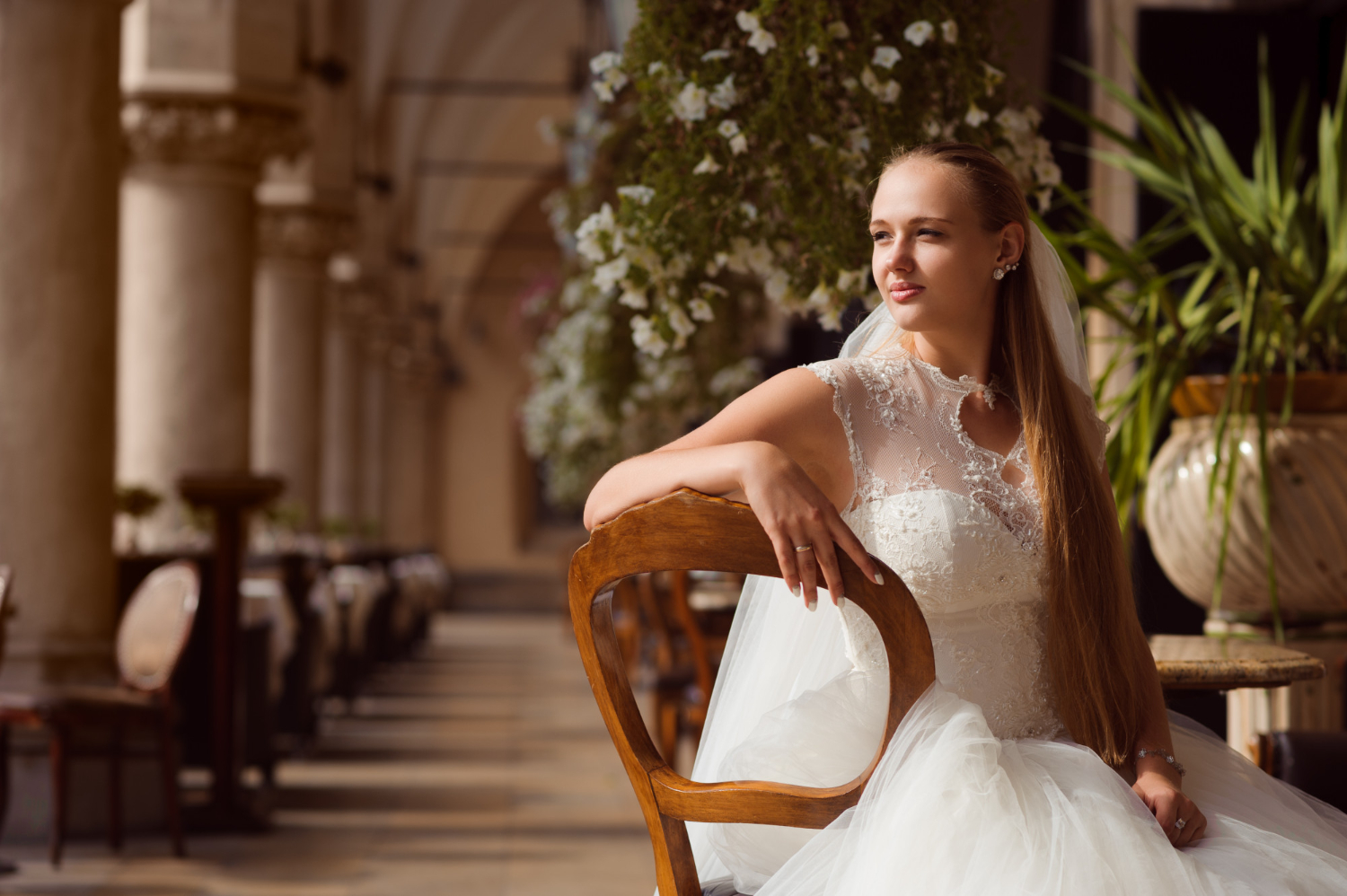
There is a quality that men who have married Slavic brides describe with surprising consistency, and they reach for similar words when they try to explain it. Steadiness. Substance. A sense that the woman next to them has faced difficulty before, and emerged from it without becoming brittle or performatively resilient. A Slavic bride is not unaffected by hardship. She is shaped by it in ways that produce a particular kind of inner architecture, and that architecture is what the phrase quiet strength is actually pointing toward. It is not a marketing description. It is an accurate observation about a cultural formation that has genuine consequences for how Slavic women approach marriage.
Where the Quiet Strength of Slavic Brides Comes From
Slavic women come from countries that have experienced more political, economic, and social disruption in the last hundred years than most Western populations can easily imagine. Russia, Ukraine, Poland, the Czech Republic, Bulgaria, Serbia, Belarus and the other Slavic nations have navigated revolution, war, occupation, economic collapse, and rapid social transformation within living memory. The women who grew up in these environments did not develop their character in conditions of security and abundance. They developed it in conditions that required genuine adaptability, practical competence, and emotional resilience as functional necessities rather than aspirational qualities.
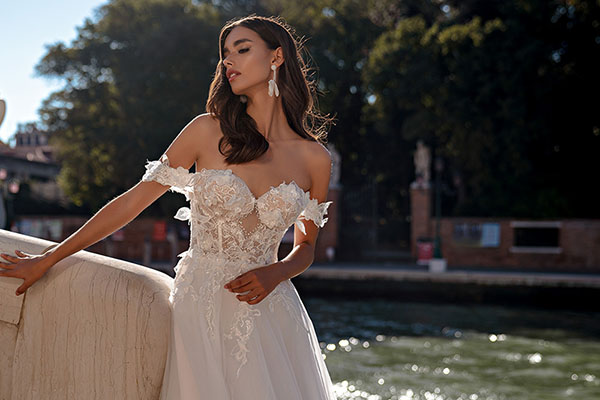
The practical competence that results is visible and concrete. Slavic brides tend to be highly capable across a wide range of domestic, professional, and interpersonal domains not because they were trained to be housewives but because necessity produced versatility. A Ukrainian woman who managed a household through economic crisis, maintained a career through political instability, and maintained family bonds across forced displacement has demonstrated capabilities that no resume captures adequately. Men who marry Slavic brides consistently describe this competence as one of the most attractive qualities about their wives, and they distinguish it clearly from the culturally constructed femininity that they associate with other international bride markets.
Education is part of the foundation. Slavic countries maintained strong educational systems even through periods of political difficulty, and Slavic women are among the most educated in the world relative to their male counterparts. Russia, Ukraine, Poland, and other Slavic nations regularly rank in the top tier globally for female educational attainment. A Slavic bride is typically a woman with a university education, a professional background, and the intellectual engagement that comes with both. The assumption that Slavic brides are primarily seeking economic security through foreign marriage ignores the educational and professional profile of the women the data actually describes.
What Slavic Brides Value in a Marriage Partner
Slavic brides evaluate foreign partners on criteria that differ from what men accustomed to Western dating culture expect. The qualities that matter most are not the ones that generate immediate attraction. They are the ones that predict reliability over time.
Stability is the first filter, and it means something specific. Slavic women who have lived through economic uncertainty or political instability evaluate stability not primarily as a financial condition but as a character trait. Does this person follow through on what he says? Does he remain consistent when circumstances are difficult? Does he respond to challenge with steadiness rather than withdrawal? A man who presents well in comfortable conditions but becomes unreliable under pressure does not represent stability in the sense that a Slavic bride is actually evaluating.
Respect is the second quality, and Slavic brides tend to evaluate it more precisely than the word usually suggests. They are watching for the difference between appreciation that is genuine and admiration that is primarily aesthetic. A man who values his Slavic bride for her appearance, her domestic competence, and her cultural warmth without engaging with her intelligence, her professional identity, and her individual perspective is offering a form of attention that many Slavic women find ultimately unsatisfying. The quiet strength that characterizes these women includes the capacity to recognize that difference clearly, and to choose accordingly.
Emotional engagement is the third quality, and it runs against the stereotype that Slavic brides prefer emotionally reserved partners. Slavic women are emotionally literate and value emotional presence in a partner. They do not express emotion in the effusive way that Latin American women do, and they are not as indirect as East Asian women in communicating emotional states. Slavic women tend toward emotional honesty that is modulated but real. They expect the same from a partner, and they find emotional unavailability as unsatisfying as emotional excess.
The Diversity Within Slavic Brides
The term Slavic brides covers women from more than a dozen countries with genuine cultural differences that matter in practice. A Russian bride and a Polish bride share a Slavic heritage, but they come from countries with different historical relationships to Western Europe, different religious traditions, different relationships to modernity and tradition, and different expectations around the roles of men and women in marriage.
Russian and Ukrainian brides tend to maintain more traditional orientations around gender complementarity in marriage, where roles are differentiated rather than identical, without this reflecting a lack of individual ambition or professional identity. Polish brides come from a Catholic cultural tradition with strong family values, but operate within a society that has moved significantly toward Western European norms around gender equality in recent decades. Czech and Slovak brides tend toward a more secular orientation and a relationship culture that feels closer to German or Austrian models than to the more traditional East Slavic pattern.
Bulgarian and Serbian brides bring Balkan cultural influences that add warmth and expressiveness to the Slavic baseline. Women from these countries tend to be more demonstratively affectionate than their Russian or Polish counterparts, and their family cultures involve a degree of closeness and ongoing involvement that feels similar in structure to Mediterranean family cultures. Understanding which specific Slavic culture a woman comes from matters more than the general Slavic category in predicting what she will be like as a partner.
What Marrying a Slavic Bride Actually Requires
The quiet strength that Slavic brides bring to marriage is not unconditional or inexhaustible. It is sustained by a relationship environment that respects and reciprocates what it receives. Men who married Slavic brides and found the marriage deeply satisfying consistently describe having matched their wife’s investment in the relationship rather than consuming it. Men who found Slavic marriage difficult consistently describe having underestimated what their wife required in return for what she was giving.
Language is a real consideration. Russian, Ukrainian, Polish, and the other Slavic languages are complex, and most Slavic brides who interact with foreign men have functional or strong English. But the depth of connection available in a shared language, even imperfect Slavic on the foreign partner’s part, is genuinely different from the connection available through English alone. Men who invest in even basic Russian or Polish consistently describe it as one of the most rewarding investments in their relationship, both for the practical communication it enables, and for what the effort signals about the seriousness of their engagement.
Family involvement varies significantly by national background but is real across all bridal culture differences. A Slavic bride maintains strong ties to her family of origin, and those ties do not dissolve into a new marriage. They continue, and the foreign partner who engages with her family genuinely, who learns her parents’ names and something of their history, who treats the extended family as part of what he married into, finds that those relationships become one of the enriching dimensions of his marriage rather than an obligation he manages at a distance.
The quiet strength behind every Slavic bride is not a decorative quality. It is the foundation on which everything else about these women is built, and it is available to the men who meet it with equivalent seriousness. These are not women who require easy handling. They are women who respond to genuine partnership with a depth of loyalty and commitment that most men who have experienced it describe as unlike anything they encountered before.